
The dream of working from a beach in Bali or a café in Lisbon is more achievable than ever. But is becoming a digital nomad the right move, or should you stick to remote work from your home country? For Africans exploring global opportunities in 2025, this decision could shape your career, finances, and lifestyle.
In this guide, we’ll break down:
✅ Remote work vs. relocation: Key pros and cons
✅ Visa-friendly countries for African digital nomads
✅ Cost of living comparisons (staying vs. moving abroad)
✅ How to decide which path fits your goals
By the end, you’ll know whether to pack your bags or optimize your freelance career from home. Let’s dive in!
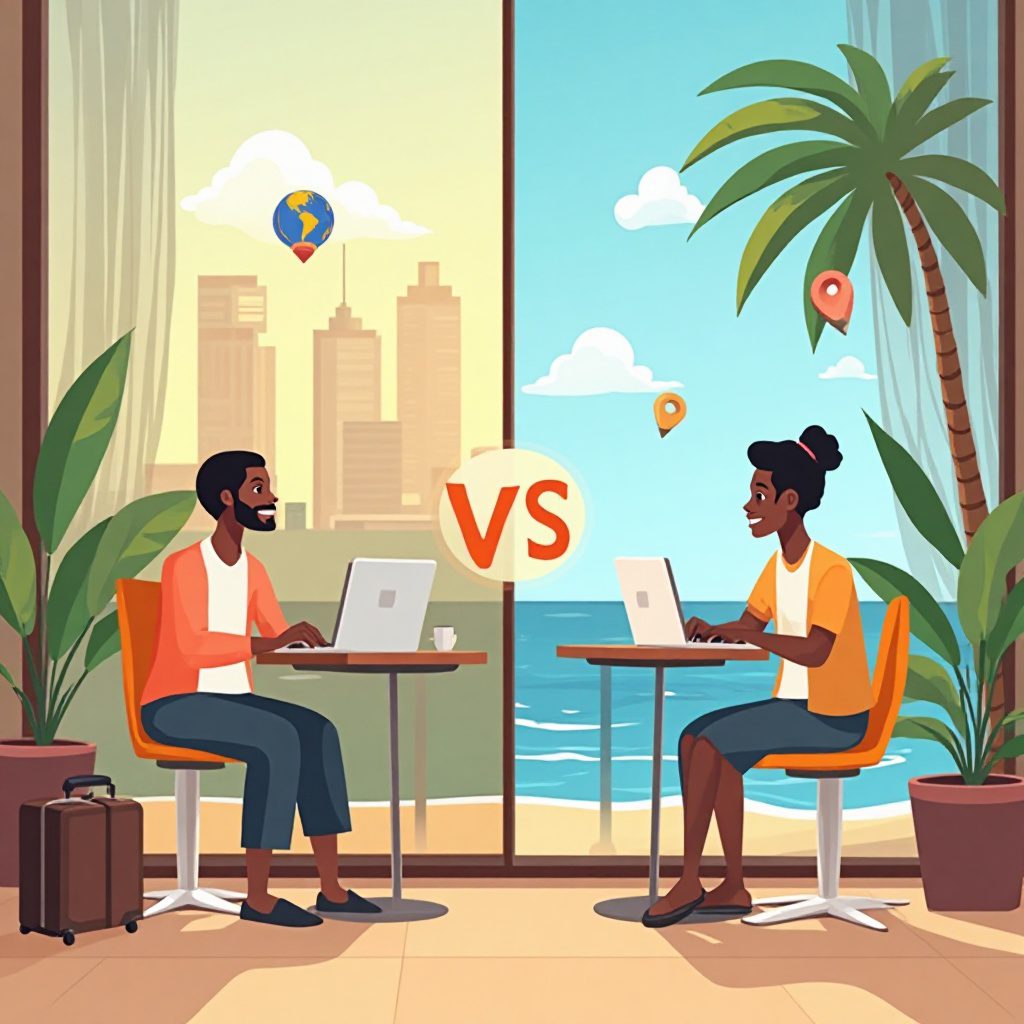
Option 1: Remote Work from Home (Africa)
Pros
✔ Lower Costs – No need to pay for expensive visas or international rent.
✔ Family & Community – Stay close to your support network.
✔ Stable Internet – Major African cities (Lagos, Nairobi, Accra) have improved connectivity.
✔ Time Zone Advantage – Easier to sync with European or American clients.
Cons
✖ Limited Networking – Fewer in-person meetups with global professionals.
✖ Power Issues – Some areas still face electricity instability.
✖ Currency Challenges – Managing USD/EUR payments with local banks can be tricky.
💡 Best for: Freelancers who value stability and want to maximize earnings without relocation stress.
Option 2: Relocation (Digital Nomad Abroad)
Pros
✔ Higher Quality of Life – Access to better healthcare, infrastructure, and safety in some countries.
✔ Networking Opportunities – Meet other nomads and potential clients in coworking spaces.
✔ Travel & Adventure – Experience new cultures while working.
Cons
✖ Visa Hassles – Many countries don’t offer long-term visas for Africans.
✖ Costly Relocation – Flights, deposits, and healthcare add up quickly.
✖ Homesickness – Being far from family can be tough.
💡 Best for: Solo professionals or couples without dependents who crave adventure.
Visa-Friendly Countries for African Digital Nomads (2025)
| Country | Visa Type | Duration | Key Requirement |
|---|---|---|---|
| Portugal | D7 Passive Income Visa | 1-2 years | €760/month income proof |
| Dubai (UAE) | Remote Work Visa | 1 year | $3,500/month income |
| Georgia | Digital Nomad Visa | 1 year | No minimum income |
| Rwanda | Africa Nomad Visa | 2 years | $1,500/month income |
⚠ Note: Some countries (like Spain/Germany) are harder for Africans due to strict Schengen rules.
Cost of Living Comparison: Africa vs. Popular Nomad Hubs
| Expense | Lagos, Nigeria | Bali, Indonesia | Lisbon, Portugal |
|---|---|---|---|
| Rent (1-bed) | $200-$400 | $500-$800 | $900-$1,500 |
| Food (Monthly) | $150-$300 | $200-$400 | $300-$600 |
| Coworking Space | $50-$100 | $100-$200 | $150-$300 |
| Visa Fees | N/A | $300 (B211A) | €90 (D7 Application) |
💡 Key Takeaway: Staying in Africa is cheaper, but some nomad hubs offer better quality of life.
How to Decide: 5 Questions to Ask Yourself
- “Can I afford the move?” – Run the numbers with our free Digital Nomad Budget Planner (download below).
- “Do I need stability or adventure?” – Remote work = steady; nomad life = unpredictable.
- “How important is my support system?” – Family/community ties matter.
- “What’s my long-term goal?” – Building wealth vs. experiencing the world.
- “Am I mentally prepared?” – Relocation stress is real.
Final Verdict: Which Path Wins?
Stick to Remote Work in Africa If You…
- Want to save more money
- Have family commitments
- Prefer a stable routine
Become a Digital Nomad If You…
- Crave travel and new experiences
- Can meet visa requirements
- Have a reliable remote income stream
Ready to Plan Your Next Move?
📊 Download our free Digital Nomad Budget Planner to compare costs and make the right choice!
🔹 Follow @eBlog360 on Instagram for more remote work tips.
🔹 Join our Digital Nomad Africa Facebook Group to connect with others.
Which lifestyle appeals to you more? Comment below! 🌍✈️